Italian Restaurant Etiquette: Mistakes to Avoid
June 5, 2026 • ItalianNow • 5 minute read
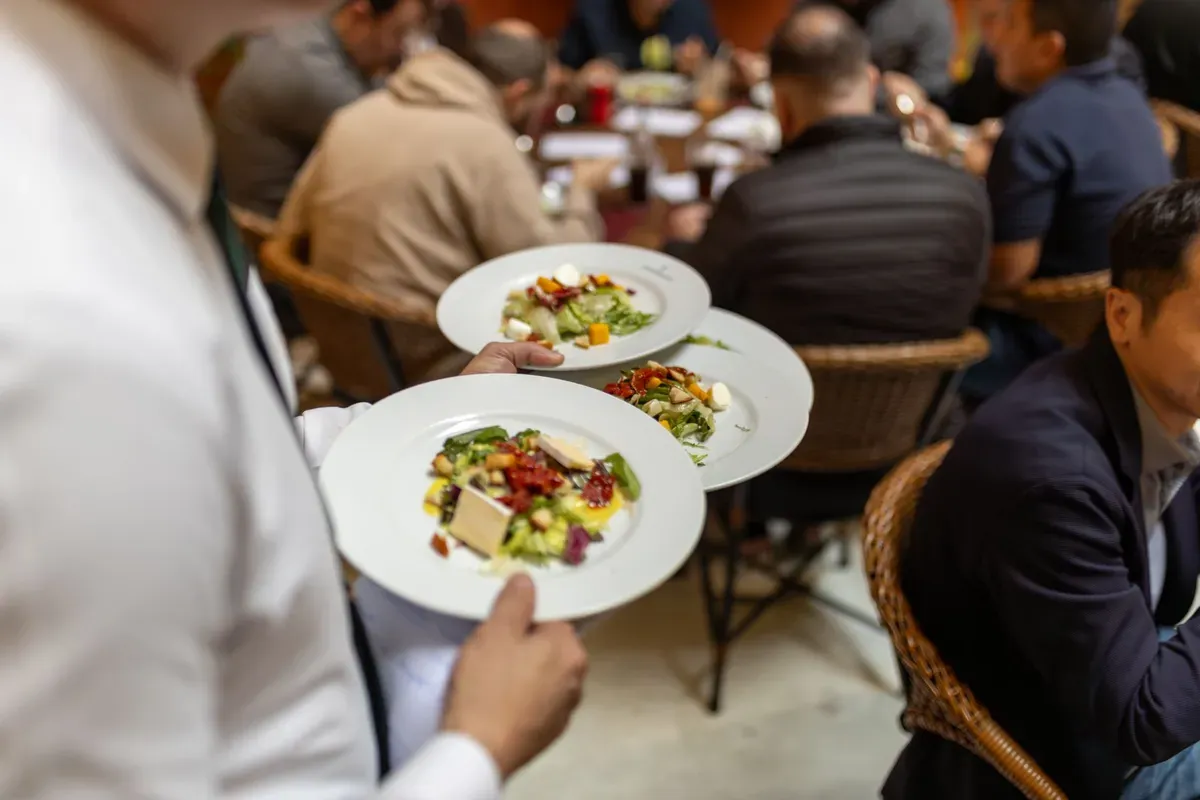
Table of Contents
- First, the meal structure that explains everything
- Mistake 1 — A cappuccino after the meal
- What to order instead
- Mistake 2 — Parmesan on fish
- When cheese is welcome
- Mistake 3 — Showing up at the wrong time
- Booking and arriving
- Mistake 4 — Asking for substitutions
- Three more things tourists get wrong
- You already have what you need
You sit down at a tiny trattoria in Rome, the food is perfect, and then you do the one thing that makes the waiter quietly file you under “tourist”: you order a cappuccino. Most dining guides will tell you not to do that — but they leave you stuck when the cameriere (waiter) asks “Da bere?” (“To drink?”) and you want to order the right thing instead. The good news is that almost every Italian dining rule comes from one simple logic. Learn the shape of the meal and a handful of phrases, and the etiquette stops being a minefield and starts being a language you can actually speak.
First, the meal structure that explains everything
Italian dining rules feel arbitrary until you see the sequence they’re built on. A full meal moves through fixed courses, and most “mistakes” are really just breaking that order.
| Course | Italian | What it is |
|---|---|---|
| Pre-meal drink | aperitivo | A spritz or prosecco to open the appetite |
| Starter | antipasto | Cured meats, cheeses, bruschetta |
| First course | primo | Pasta, risotto, or soup — carb-based |
| Second course | secondo | The meat or fish main, served plain |
| Side | contorno | Vegetables or salad, eaten with the secondo |
| Dessert | dolce | Tiramisù, panna cotta, gelato |
| Coffee | caffè | An espresso — never a cappuccino |
The two big terms to anchor are primo (the pasta course) and secondo (the main). You don’t have to order all of it — a primo alone, or a secondo with a contorno, is completely normal. The structure governs sequence, not obligation. Notice the salad-as-a-contorno sits with the main, never before the pasta — so ordering a salad “to start” is the first quiet giveaway.
Mistake 1 — A cappuccino after the meal
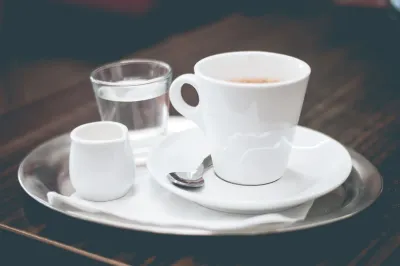
Milky coffee — cappuccino, caffè latte, latte macchiato — is a breakfast drink, rarely ordered after about 11 a.m. and never after lunch or dinner. To Italians, all that hot milk sits too heavy on a full stomach. After a meal you want a plain espresso, and you order it simply as un caffè.
What to order instead
| Italian | English |
|---|---|
| Un caffè, per favore. | An espresso, please. |
| Un caffè macchiato. | Espresso with a touch of milk. |
| Un caffè corretto. | Espresso 'corrected' with a shot of grappa. |
| Un digestivo. | An after-dinner spirit. |
Watch one trap: asking for “un latte” gets you a glass of milk, not a latte. If you genuinely want the milky drink, say caffè latte in full — but after a meal, ordinare (to order) a simple caffè is the move that fits right in. For the full coffee playbook, our guide to ordering coffee in Italy like a local breaks down every variation.
Mistake 2 — Parmesan on fish
Italians never add parmigiano to seafood. The reasoning is culinary, not snobbery: aged cheese is strong and salty, and it flattens the delicate flavour of pesce (fish). Ask for it on spaghetti alle vongole and the waiter may gently decline — you’ve asked him to unbalance the dish.
When cheese is welcome
On most pasta with meat or vegetable sauces, cheese is offered or fair to request. Just know your cheese: Roman classics like carbonara and cacio e pepe take pecorino, not parmigiano.
| Italian | English |
|---|---|
| Posso avere del parmigiano? | May I have some parmesan? |
| Del formaggio grattugiato, per favore? | Some grated cheese, please? |
The simple rule: eat the dish the way the kitchen built it. That same logic carries over to a secondo of carne (meat) or fish — it arrives plain because the contorno is meant to round it out.

Enjoying this?
Want to walk into any trattoria and order with confidence? Grab our free PDF of the 100 most useful Italian words — sent straight to your inbox.
Mistake 3 — Showing up at the wrong time
Italian kitchens keep tight hours and usually close in the afternoon. Lunch (pranzo) runs roughly 12:30–14:00; dinner (cena) opens around 19:30, later in the south. A kitchen serving dinner at 6 p.m. is almost certainly a tourist trap.
Booking and arriving
| Italian | English |
|---|---|
| A che ora aprite per cena? | What time do you open for dinner? |
| La cucina è ancora aperta? | Is the kitchen still open? |
| Vorrei prenotare un tavolo per due alle venti. | I'd like to book a table for two at 8 p.m. |
| Avete un tavolo per due? | Do you have a table for two? |
That vorrei (“I’d like”) is the politeness engine of Italian restaurant talk — it softens any request. If you’re building out your travel toolkit, the essential Italian travel phrases guide gives you a whole kit built around it.
Mistake 4 — Asking for substitutions
Swapping or omitting ingredients out of preference can read as distrusting the chef — the dish is composed on purpose. Allergies are the fully accepted exception. State one plainly and you’ll be taken seriously. And here’s the classic learner slip: self-descriptions agree with your gender.
| Italian | English |
|---|---|
| Sono allergico a... | I'm allergic to... (said by a man) |
| Sono allergica a... | I'm allergic to... (said by a woman) |
| Sono vegetariano. | I'm vegetarian. (man) |
| Avete opzioni vegetariane? | Do you have vegetarian options? |
A man says allergico and vegetariano; a woman says allergica and vegetariana. Gender agreement runs through all of Italian — if it still trips you up, the noun gender rules guide clears it up. The graceful move is to ask whether the kitchen has what you want, rather than demand a swap.
Three more things tourists get wrong
A few smaller details separate the confident diner from the confused one:
- The coperto is not a scam. It’s a per-person cover charge (€1–3) for bread and table service, printed on the menu and added to il conto (the bill). It’s not a tip — so don’t argue over it or double-tip.
- The bill never comes unasked. Rushing you out would be rude. When you’re ready, say Il conto, per favore or Possiamo pagare? (“Can we pay?”).
- Tipping is modest. Service is effectively covered. Rounding up or leaving a few euros in cash for great food is generous — there’s no 15–20% expectation.
- Order your water. Tap water isn’t standard. Ask for acqua naturale (still) or frizzante (sparkling).
- Fare la scarpetta. Mopping up leftover sauce with bread is affectionate and welcome in a trattoria — go ahead.
You already have what you need
Italian restaurant etiquette is really just empathy plus a few well-chosen words. Order the courses in sequence, trust the kitchen, ask for the conto when you’re ready — and reach for that espresso, not the cappuccino. Pick one phrase from this guide, say it out loud on your next trip to a ristorante, and you’ll feel the shift the moment the waiter answers you like a local. Buon appetito!
Test your table manners
5 quick questions to see what stuck.
-
What do you order after dinner in Italy?
Un caffè means an espresso. Milky coffees like cappuccino are breakfast drinks — too heavy after a meal.
-
It's normal to ask for parmesan on a seafood pasta in Italy.
Aged cheese overpowers delicate fish. Italians never add parmigiano to seafood — a waiter may politely decline.
-
Match each course to where it falls in the meal.
Tap a Italian word, then its English meaning to pair them.
Italian
English
-
Complete the request for the bill: “Il ___, per favore.”
The bill never comes unasked — rushing diners is rude. You say “Il conto, per favore.”
-
A woman saying she's vegetarian uses which form?
Self-descriptions agree with gender: a man says vegetariano, a woman says vegetariana.
Related Articles
Keep going with Italian.
Get our starter pack of the 100 most common words — and the occasional new lesson when one's worth reading.